
Psychedelic Retreat informed by Acceptance and Commitment Therapy, with one-to-one follow up integration
£2,300.00
*Add to basket option is for payment only after application is approved”
Location:
Calella, near Barcelona, Spain
2026 Dates:
- 15-19th June
Contribution:
- £2300 (accommodation and meals included, excluding cost of psilocybin truffles
- Contact us for concessionary fees
Facilitators:
- Henry Whitfield MSc,
- Robert Krause,
- Karlie Shelley
- Margo Fisher PhD

A sea view from our retreat centre
Originally designed for mental health professional but now open to all, this retreat offers a deeply supported, ACT-informed psychedelic experience, backed by real-world data. A process for experientially learning how deep psychedelic-assisted change unfolds when aligned with intensive psychotherapy change processes.
What makes this retreat different
Rather than offering a “powerful experience + good luck after,” our multi-ceremony retreat is followed by structured 1:1 integration sessions for deeper psychotherapeutic change designed to ground and amplify what began in ceremony—so new perspectives translate into lasting behaviour change. Our research into this retreat programme (submitted) showed that the acute retreat effects increased further still (in all measures) and were sustained at long term follow up, when coupled with the precise psychotherapy offering this programme includes. Some researchers describe such a combined approach as a coming ‘phase 2’ in the psychedelic research renaissance: what happens when the insight and intensity of a psychedelic experience transfer into known processes of lasting change such as imaginal exposure?
This integrated Psychedelic retreat includes:
- Group processes for deeper relational work and communitas.
- The ACT reverse compass for confronting barriers of mind.
- Four extended 90min follow-up integration sessions
- Full catering and accommodation in a beautiful Catalonian retreat centre overlooking the sea
This programme is also appropriate for mental health professionals interested in becoming psychedelic-assisted therapists, psychedelic therapists interested in an ACT-informed psychedelic experience and those wishing to better support people in integrating psychedelic experience.
 The Programme:
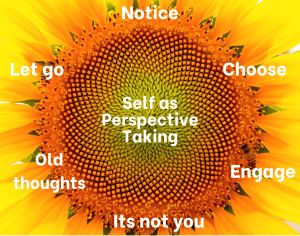
Preparation usually begins four weeks before you arrive with many preparation suggestions and an online icebreaking Zoom call. In preparation you may consider your personal challenges in terms of ‘willingness’ (how open are you to certain discomforts?), ‘experiential avoidance’ (what are the obvious or subtle ways you avoid those inner discomforts?), your motivations (what impulses behind your inner and outer behaviours are keeping you from what you truly want). Simple metaphors such as the ‘reverse compass’ may guide us on our way: where is your mind telling you not to go?
Day 1: Arrival (at 4pm in Calella) with further preparation: building communitas in the group and a flexible sense of self.
All are welcome to use the sauna.
Day 2: Self-as-observer meditation, breath and bodywork – you are not your programming. Afternoon ceremony – with Psilocybin Truffles, you embark on your psychedelic journey with the support of sober mental health professionals.
Day 3: What is still coming up? Being in your direct experiencing. ACT-informed authentic relating exercises to go deeper into our personality structures, function awareness of why we do what we do, the motivations and effects of our thinking. Address shame and bond in our common humanity. A spectrum of selves exercise to integrate your parts and foster a transcendent self.
Day 4: Increasing willingness and noticing the barriers of mind. Let different parts of you speak. Breathwork. Second Ceremony – an opportunity to go deeper.
Day 5: Further integration – Is any of your inner or outer behaviour changing? What new paths do you feel invited to follow? Is a new view emerging of the kind of life you want to live? Balancing the head with the heart: Awareness practices coupled with behaviour change.
Each day will include movement and other experiential practices to help us get into our direct experiencing. Through sharing circles we grow together.
Integration therapy: Then each participant is then offered four 90min integration sessions via zoom, including the opportunity to do trauma-focussed exposure work, for addressing what may be deeply ingrained patterns. The length beyond the 50min hour brings deeper work within reach, as done in many trauma-focussed approaches. These sessions further support the unfolding of awareness that opened during the retreat and help translate this awareness into multiple domains of your life for a new alignment. It may also be a critical learning period to take advantage of. Our current integration model brings together evolutionary science, ACT and ‘parts work’ in psychedelic context as described in the Spectrum of Selves model, integrating behaviour change to find a new balance between self-care, relationships, community and environment.
As well as offering these latter perspectives, the ACT model also invites its own integration with other models and traditions, into a behaviourally aware eclecticism. Some of these modalities of integration include breathwork, art therapy, shame work and Internal Family Systems.
This retreat has been developed through multiple iterations since 2019 and is informed by quantitative and qualitative datasets.
Led by clinicians and researchers in a legal setting with extensive ACT experience and psychedelic-research experience.
Minimum facilitator ratio: one to every 3.25 participants minimum. check-ins before, between, and after ceremonies. Small group design for safety and depth
Spaces are highly limited to a maximum of 14.
Testimonials
About our facilitators
Henry J. Whitfield PhD Candidate
Henry Whitfield is an Association of Contextual Behavioural Science (ACBS) Peer-reviewed Acceptance and Commitment Therapy trainer, an Accredited Advanced TIR (PTSD therapy) Trainer and Cognitive Behavioural Psychotherapist (MSc – CBT) He is now in the final stages of a PhD in psychedelic-assisted Acceptance and Commitment therapy, looking at interactions between psilocybin experiences and therapeutic processes during and after psilocybin.
Dr Robert Krause
Robert Krause, DNP APRN-BC is a doctor of nursing practice and is a clinical specialist in psychiatric and mental health nursing. He is currently Visiting Faculty at The Graduate Institute where he is teaching a course in Mind-Body Medicine. For twenty years Robert was a Lecturer in Psychiatry at Yale University in the schools of Nursing and Medicine.
He has lectured in philosophy at Quinnipiac University and at Western Connecticut State University. Robert has certifications in Global Mental Health: Trauma and Recovery from Harvard University, in Psychedelic-Assisted Psychotherapies and Research from the California Institute of Integral Studies (CIIS) and in Sex therapy also from the CIIS. He was a faculty advisor to the Yale Psychedelic Research Group and is currently the lead therapist and co-author of the treatment manual for the Psilocybin – Induced Neuroplasticity in the Treatment of Major Depressive Disorder at the Yale School of Medicine. He is also a co-author of the recently published ‘Psilocybin-assisted therapy of major depressive disorder using Acceptance and Commitment Therapy as a therapeutic frame’ Journal of Contextual Behavioral Science 15 (2020): 12-19.
Robert’s daily practices include yoga, meditation and tantra. He completed yoga instructor training with Aum Pradesh Guar in Goa, India and was certified in tantra instruction through the Urban Tantra Professional Training Program. He has been practicing zazen meditation for 30 years.
Currently Robert maintains a private integrative psychotherapy practice in New Haven, Connecticut.
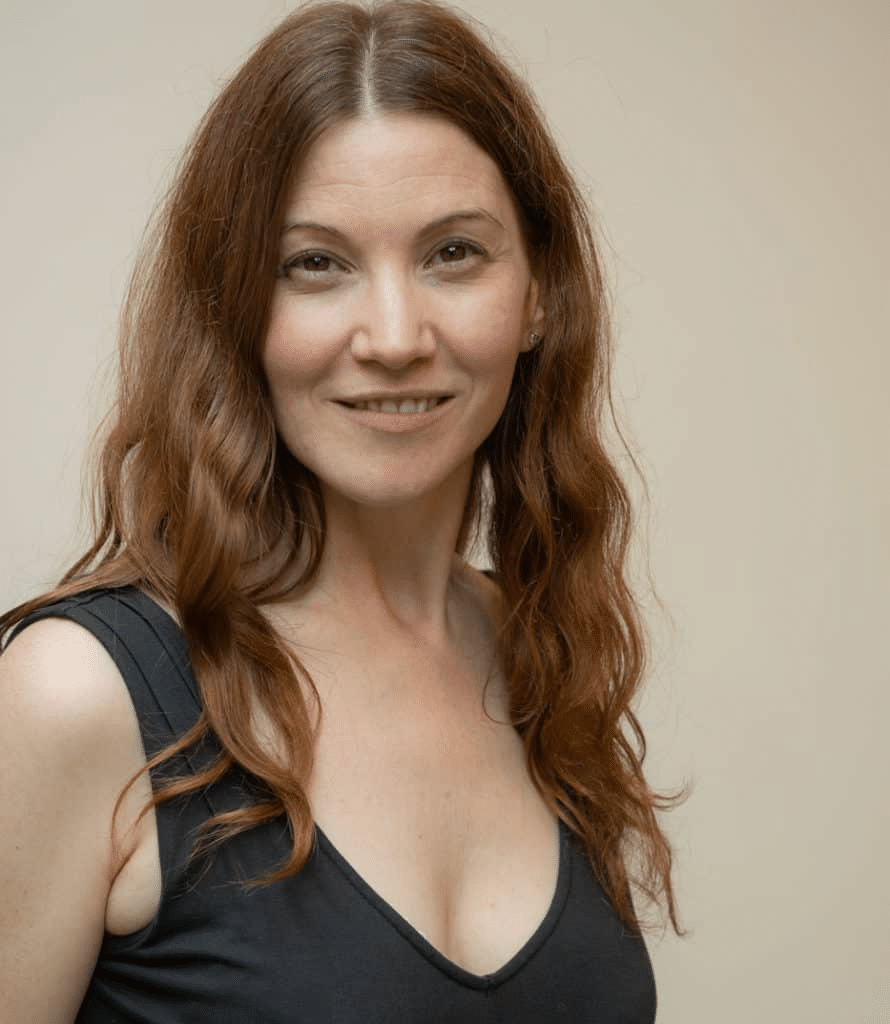
Margo Fisher PhD
Margo has a depth of experience as a psychedelic guide. A particular area of expertise is early childhood trauma, holding a safe space as clients connect with their young selves. She has guided on psilocybin clinical trials at the Centre for Psychedelic Research at Imperial College, currently guiding on a trial relating to addiction. She is also a psychotherapeutic counsellor, adept at helping clients integrate their psychedelic experiences. It brings her joy to facilitate individual and group spaces that offer the opportunity to heal, integrate and expand. Margo has built a friendship with unknowing, embodiment, vulnerability, wholeness and reverence over time; these have helped her to be and stay present.
Previously a qualitative researcher focused on human rights in the global South, she now uses her research skills to capture the lived experiences of those participating in psychedelic clinical trials. Margo lives on a farm with her partner in south west England, is a mother of an adult daughter and is gently becoming an elder.