
Expanded ACT for Psychedelic-assisted Therapy: Integrating trauma-focused ‘parts’ work with systemic change
£2,400.00
2026 Dates:
- Online: 19-20th Feb (9am-5:30pm EST)
- In New Haven, Connecticut 2nd-6th March
- with 3months fortnightly supervision
Location:
- Centered, New Haven Connecticut
Contribution:
Facilitators:
Led by Henry Whitfield
PhD candidate
with Dr. Robert Krause DNP
and Dr. Mark Landreneau
Join the community of other psychedelic therapists learning and working together through regular peer supervision
A two-plus-five-day training experience to learn a new integral model of psychedelic-assisted therapy
Who’s this course for?
This training is aimed at mental health professionals with a training in psychological therapy, who wish to learn ACT-consistent applications of psychedelic-assisted therapy. You may already work with psychedelics, helping attendees of psychedelic ceremonies to prepare for and integrate their psychedelic experiences. This training is designed to equip you with many ways to deepen and consolidate the gains that are possible with psychedelic approaches when underlying trauma and systemic barriers to change are thoroughly addressed.
This training is unique with its integral view that resolves old tensions that have fragmented psychotherapy theory and practice for decades. It offers a seamlessly integrated approach of ACT processes, ‘parts work’ (IFS), shame work (FAP) and a titrated exposure for trauma (Traumatic Incident Reduction-TIR). This new combined methodology opens possibilities to even highly experienced practitioners (see testimonials below). The processes behind two or more of these approaches can often be integrated into a single instruction for the participant at any stage of psychedelic-assisted therapy. These interventions are tailored to a wide range of psychedelic therapy challenges to enable a trauma-focussed ACT-consistent approach to systemic change, as described in the recent Spectrum of Selves paper (see https://www.frontiersin.org/articles/10.3389/fpsyt.2021.727572/full).
Informed with high-density data collected from over 60 participants attending our retreats (a study designed to reduce relapse and deepen gains in psychedelic-assisted therapy), this training highlights what we know has been helpful in producing stable psychedelic therapy gains (post 6-12 months). It integrates Somatic Internal Family Systems and Traumatic Incident Reduction with Acceptance and Commitment therapy as a process-focussed core-theoretical model, to offer a versatile, multi-modal framework. This includes a pallet of six degrees of directive/non-directiveness. Using such a pallet context-sensitively, we can resolve the directive/non-directive debate in psychedelic therapy.
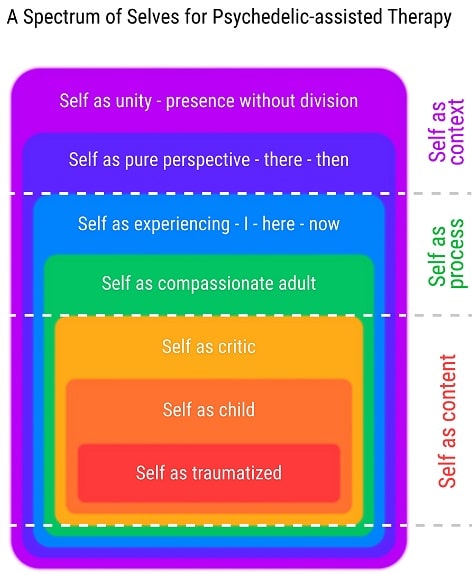

ACT brings the overarching framework of evolutionary and behavioural science principles, as well as a shortcut to accessing hidden fears. Within this framework, TIR and IFS offer additional ‘vehicles’ for implementing Contextual Behavioural Science principles thoroughly and compassionately.
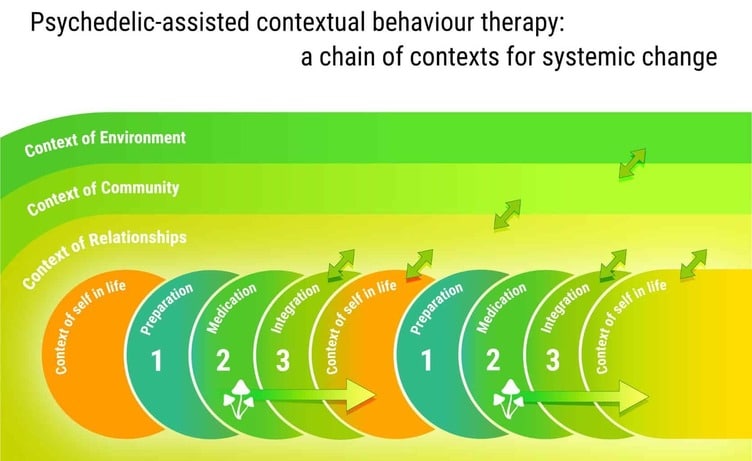
You will learn multiple interventions that align precisely with the Spectrum of Selves approach, adapted throughout the three phases of Psychedelic-assisted therapy.
The curriculum includes:
-
- A 150 page bound manual to support you during and after the training.
- A checklist for tailoring your personal training needs.
- A process-focussed approach to treatment planning, aimed at addressing key nodes in a person’s network of interacting symptoms. How might centrality and accessibility of a network symptom offer a way forward?
- Aligning pharmacology, neurobiology and behavioural practices
- Neurophysiology of Non-Ordinary States of Consciousness, Including Ketamine
- ‘Multiple-function’ interventions that apply multiple models in a single action.
- Two thirds of a certificated training in TIR, a structured approach to Trauma/PTSD comparable to EMDR in its thoroughness, yet more precise and consistent with mindfulness and ACT. If you wish to become qualified with the full certificate in TIR, this can be done with one additional day training (available online on request).
- ACT-informed Parts work to address inner conflict between your different selves.
- A protocol for differentiating between healthy and unhealthy self-story/narcissism.
- A protocol for processing intense psychedelic experiences and re-accessing perspectives and insights from the trip.
- Expanding and reinforcing new behavioural repertoires that flow from newly gained perspectives – seamlessly interconnecting the three phases of psychedelic therapy.
- Overcoming complex/long-term trauma (often more accessible post psychedelic).
- Working Somato-cognitively – reawakening feeling in the body
- Mapping and reinforcing systemic change.
- Predictors of long-lasting benefits in psychedelic therapy and how to implement them.
- ‘Inner healing intelligence’ versus varying degrees of person-centredness/ active-directiveness (and when to do which)
- Parts work for malevolent and benevolent parts/entities
- A defusion protocol for when the mind gets in the way during a dosing session.
- Shame work as a shortcut to our deeper self-concept issues (informed with Functional Analytic Psychotherapy (FAP))
- Perspective switching exercise for transcending the polarities of the mind
- Behaviour change coaching for increasing alignment in a person’s life.
Schedule:
Days 1-2 (online Feb 19-20th): Engineering a new psychedelic therapy of the future with an interoperable tool set. TIR for re-accessing and processing psychedelic experiences and related traumatic memories. If you already have TIR training you could skip this session.
Invitation to exchange sessions with peers before arriving in Connecticut.
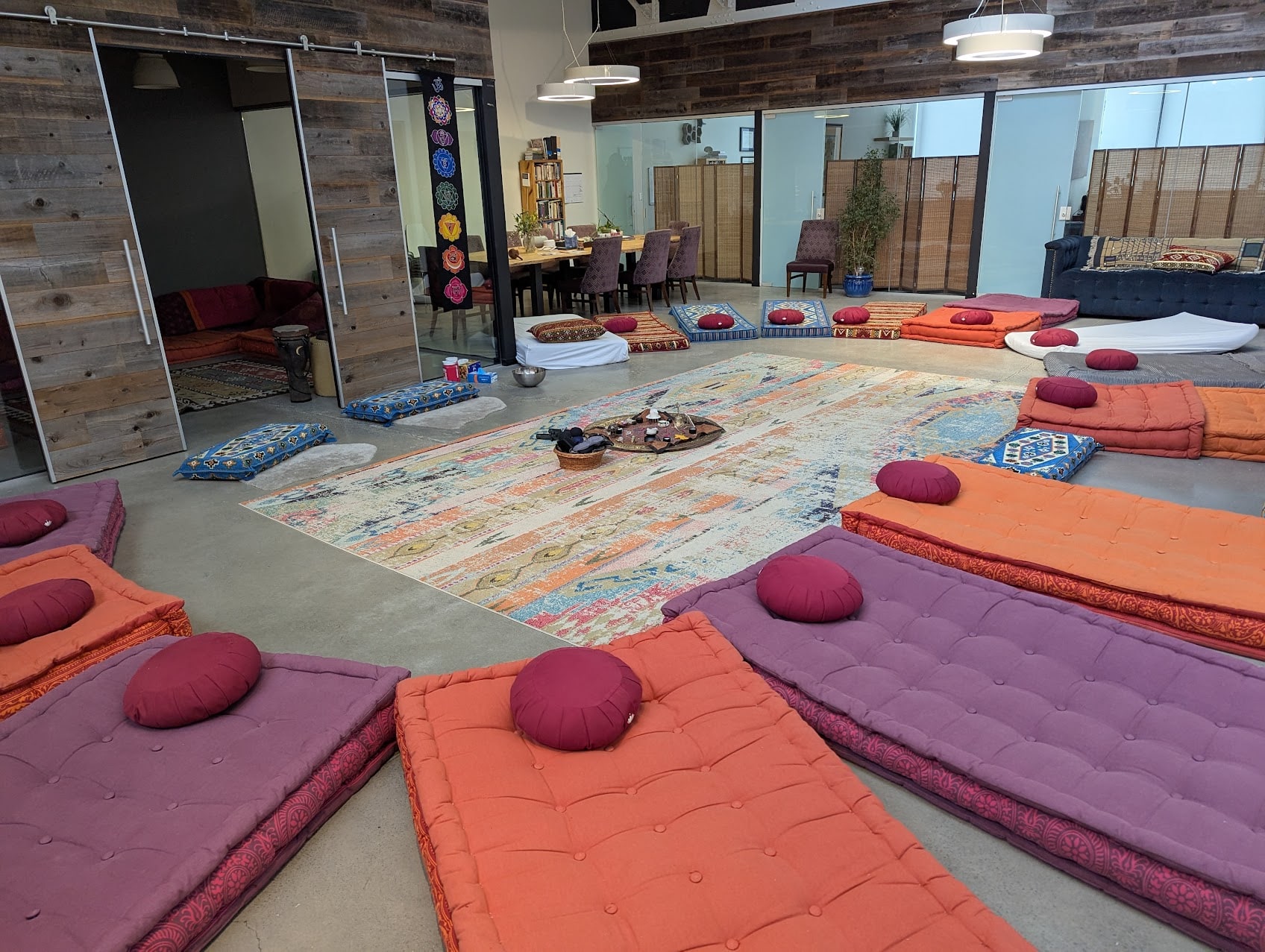
At Centred offices, New Haven, Connecticut (2nd-6th March) Lunch included
Days 3-4: ACT and the Spectrum of Selves – from shame to the ‘reverse compass’ for accessing our deeper fears, exploring the voices and behaviours of our different parts. Understanding the ACT core processes from a ‘parts’ point of view. For a taster of this see this invited speaker conference presentation: https://youtu.be/7PjiTJhTJjc
Day 5: Inner work aligned with outer systemic behaviour change. Getting ready to bring the barriers into the work. How neuroscience, psychedelic effects and behavioural processes align.
Days 6-7: Practicum of ACT expanded with trauma and parts work through the three phases of psychedelic therapy. Your chance to practice with feedback the protocols and principles that you personally need the most feedback on.
Monthly supervision included for 3months
Internship and mentoring as well access to our ongoing learning community.
About the facilitators
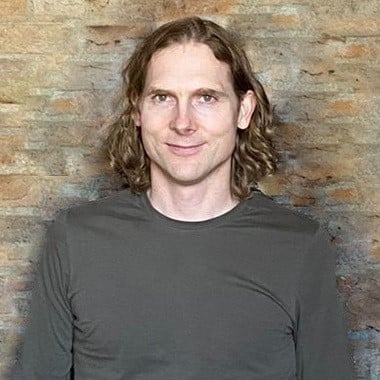
Henry J. Whitfield PhD Candidate
MSc (CBT), ACBS peer-reviewed ACT trainer, Advanced Traumatic Incident Reduction Trainer,
Henry Whitfield is an Association of Contextual Behavioural Science (ACBS) Peer-reviewed Acceptance and Commitment Therapy trainer, an Accredited Advanced TIR (PTSD therapy) Trainer and Cognitive Behavioural Psychotherapist (MSc – CBT) He is now in the final stages of a PhD in psychedelic-assisted Acceptance and Commitment therapy, looking at interactions between psilocybin experiences and therapeutic processes during and after psilocybin. His research was among the first to capture cumulative effects of therapy and psilocybin.
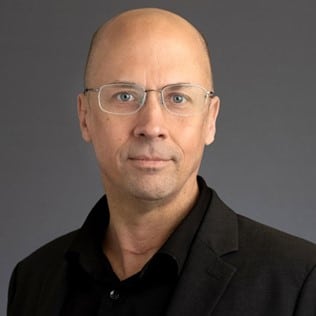
Dr Robert Krause
Robert Krause, DNP APRN-BC is a doctor of nursing practice and is a clinical specialist in psychiatric and mental health nursing. He is currently Visiting Faculty at The Graduate Institute where he is teaching a course in Mind-Body Medicine. For twenty years Robert was a Lecturer in Psychiatry at Yale University in the schools of Nursing and Medicine.
He has lectured in philosophy at Quinnipiac University and at Western Connecticut State University. Robert has certifications in Global Mental Health: Trauma and Recovery from Harvard University, in Psychedelic-Assisted Psychotherapies and Research from the California Institute of Integral Studies (CIIS) and in Sex therapy also from the CIIS. He was a faculty advisor to the Yale Psychedelic Research Group and is currently the lead therapist and co-author of the treatment manual for the Psilocybin – Induced Neuroplasticity in the Treatment of Major Depressive Disorder at the Yale School of Medicine. He is also a co-author of the recently published ‘Psilocybin-assisted therapy of major depressive disorder using Acceptance and Commitment Therapy as a therapeutic frame’ Journal of Contextual Behavioral Science 15 (2020): 12-19.
Robert’s daily practices include yoga, meditation and tantra. He completed yoga instructor training with Aum Pradesh Guar in Goa, India and was certified in tantra instruction through the Urban Tantra Professional Training Program. He has been practicing zazen meditation for 30 years.
Currently Robert maintains a private integrative psychotherapy practice in New Haven, Connecticut.
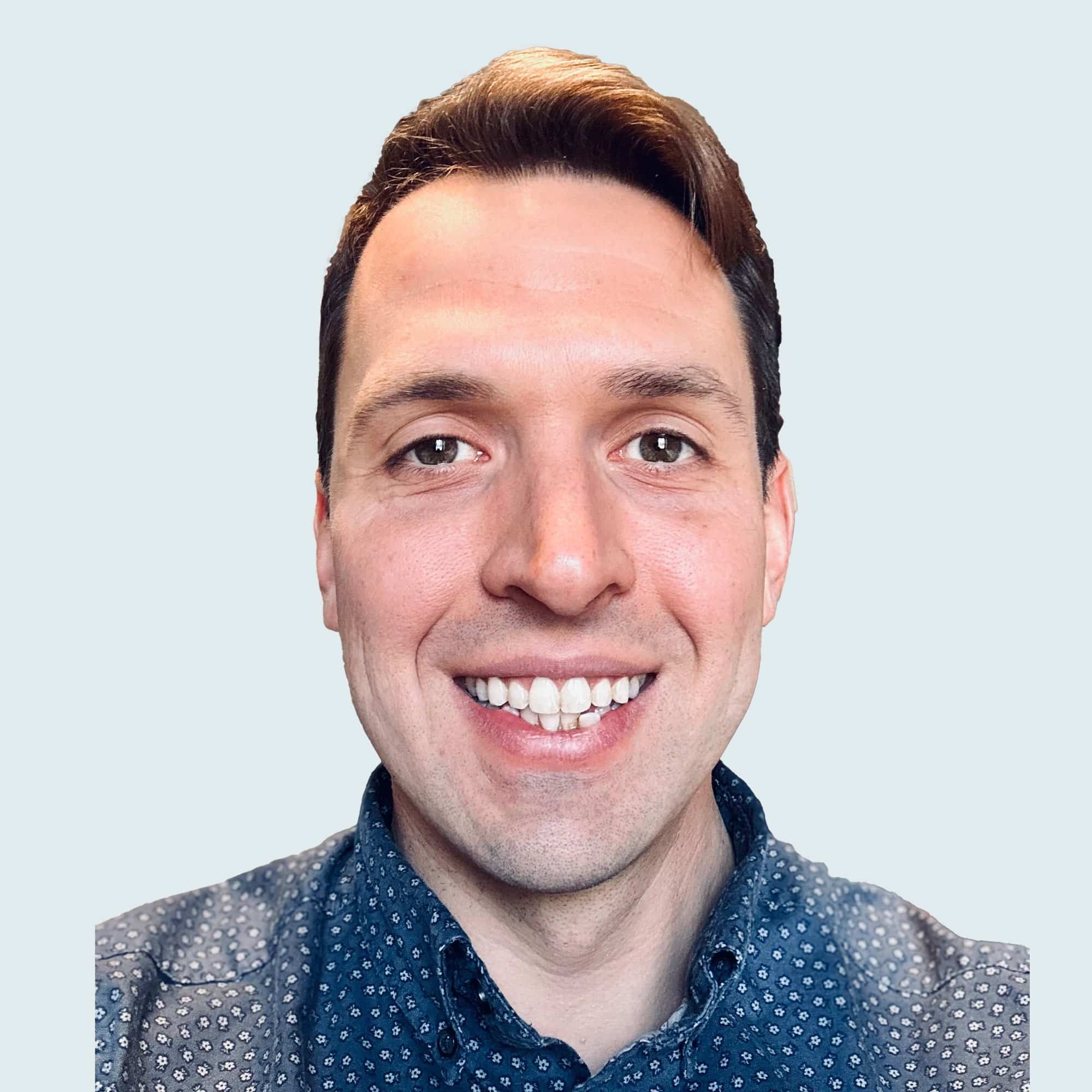
Dr. Mark Landreneau
Mark Landreneau received his MD from Columbia University College of Physician and Surgeons and subsequently completed a neurology residency and neurocritical care fellowship at Yale-New Haven Hospital. He has worked as faculty in the department of neurology at Yale University and now maintains a practice at Centered focusing on neuropsychiatric disorders in addition to his neurohospitalist practice at Yale.
He has significant experience and skill treating life threatening injuries of the nervous system including brain injuries that cause disorders of consciousness. He has written multiple articles and book chapters on severe strokes, brain death, and novel treatments for brain and spinal injuries. Over time he developed a particular interest in mood disorders related to neurological illness as well as mood disorders more generally, particularly in the context of neuroplastogens and psychedelics.
He brings a background using multimodal monitoring in the ICU–integrating noninvasive and invasive monitoring such as EEG, advanced neuroimaging, and novel neurophysiological monitors. Using insights from recent clinical trials and basic science studies on psychedelics, he has a deep interest in integrating the neurophysiology of psychedelics with psychotherapy in order to maximize treatment effects from this powerful class of medications.
At the moment, his focus is on ketamine assisted therapy, learning and integrating cutting edge developments in the field into his practice. His approach is informed by an emerging neuroscientific model of circuits and networks, viewing this as inseparable from subjective experience, where humanistic traditions have studied the mind for thousands of years.